
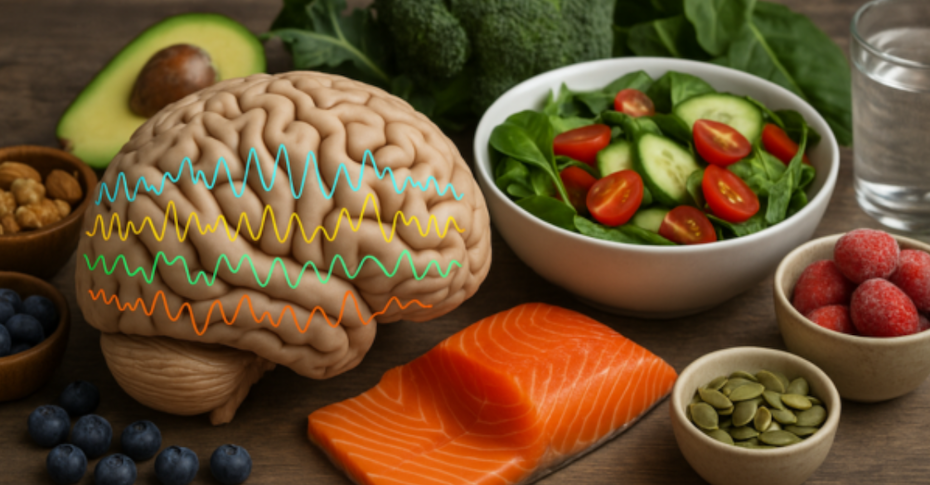

Your brain runs on electricity—literally! Brain waves are electrical signals that affect how you think, feel, sleep, and focus. But did you know that what you eat can directly impact your brain wave activity?
Let’s break down how your diet can fuel your brain for better focus, deeper relaxation, and sharper thinking.
What Are Brain Waves?
Your brain produces five main types of brain waves, each with a different frequency and function:
- Delta Waves (0.5–4 Hz) – Deep sleep & healing
- Theta Waves (4–8 Hz) – Creativity, calmness, and intuition
- Alpha Waves (8–12 Hz) – Relaxation while awake
- Beta Waves (12–30 Hz) – Active thinking, focus, and problem-solving
- Gamma Waves (30–100 Hz) – Memory, learning, and high-level cognition
A healthy brain needs the right nutrients to generate these waves efficiently. Let’s explore some of the top diets that help your brain thrive.
1. The Mediterranean Diet: Natural Fuel for Alpha & Beta Waves
The Mediterranean diet is loaded with fresh fruits, veggies, whole grains, nuts, and heart-healthy fats like olive oil. It’s a brain-friendly powerhouse.
Why it works:
- Omega-3 fatty acids from fish (like salmon and sardines) help improve memory and mental clarity
- Antioxidants from berries and leafy greens protect brain cells
- Healthy fats and fiber support stable energy levels and better focus
Boosts: Alpha (relaxation) and Beta (focus) waves
2. The DASH Diet: Blood Pressure Support with Brain Benefits
Originally created to reduce hypertension, the DASH diet also benefits brain health by reducing inflammation and improving blood flow.
Key perks:
- Fruits & vegetables supply essential vitamins for brain function
- Whole grains offer steady glucose for mental energy
- Low saturated fat helps maintain healthy beta wave activity
Boosts: Beta (focus) and Gamma (cognition) waves
3. The MIND Diet: Protect Your Brain Long-Term
The MIND diet combines the best of Mediterranean and DASH diets. It’s specifically designed and could slow cognitive decline and reduce the risk of Alzheimer’s disease.
Top foods:
- Green leafy vegetables for brain cell repair
- Berries for memory and antioxidant protection
- Nuts for vitamin E and healthy fats
Boosts: Gamma (learning) and Alpha (calm) waves
4. The Ketogenic Diet: Brain Clarity Through Ketones
The keto diet is high in fat, low in carbs, and encourages the brain to use ketones as an energy source instead of glucose.
Brain benefits:
- Improved focus and reduced brain fog
- Lower inflammation, protecting brain cells
- Enhanced cognitive function and energy
Boosts: Beta (alertness) and Gamma (processing) waves
5. The Plant-Based Diet: Clean Fuel for Mental Energy
A plant-based diet focuses on whole, unprocessed plant foods—fruits, vegetables, legumes, nuts, and seeds.
Why it supports brain health:
- Antioxidants fight oxidative stress in the brain
- Fiber-rich foods improve gut-brain connection
- Plant-based omega-3s from flaxseed, chia, and walnuts enhance cognitive performance
Boosts: Alpha, Beta, and Gamma waves
Don’t Forget Hydration!
Water is essential for every brain function. Even mild dehydration can reduce your ability to think clearly and maintain steady brain wave activity.
Hydration tips:
- Drink at least 8 cups of water daily
- Eat hydrating foods (like cucumber, watermelon, oranges)
- Limit caffeine and alcohol
Brain-Boosting Nutrients to Include
For optimal brain wave support, be sure your diet includes:
| Nutrient | Brain Benefits | Found In |
| Omega-3s | Boost memory, reduce brain fog | Fish, flaxseed, chia, walnuts |
| B Vitamins | Support energy and brain signaling | Whole grains, eggs, leafy greens |
| Vitamin E | Protects brain cells from damage | Nuts, seeds, spinach |
| Magnesium | Calms the nervous system | Dark chocolate, almonds, avocados |
| Zinc | Supports memory and brain healing | Pumpkin seeds, lentils, cashews |
Foods to Avoid for Better Brain Health
Just as some foods fuel the brain, others can slow it down.
Avoid or limit:
- Sugary snacks & drinks – Can cause energy crashes and reduced focus
- Highly processed foods – Often full of additives and trans fats
- Trans fats – Linked to cognitive decline and poor brain wave activity
Lifestyle Tips to Support Brain Waves
Diet is just one part of the puzzle. For best results, combine your nutrition with these brain-friendly habits:
- Exercise regularly to boost blood flow and brain plasticity
- Prioritize sleep—especially deep sleep for healthy delta waves
- Manage stress through meditation, deep breathing, or neurofeedback therapy
Practical Tips for Eating Brain-Boosting Foods
- Plan your meals in advance to avoid unhealthy last-minute choices
- Snack smart with nuts, fruit, or veggies
- Cook at home more often so you can control ingredients
Final Thoughts
Your brain is your most powerful tool—and it runs best when properly fueled. By choosing the right foods, staying hydrated, and maintaining a healthy lifestyle, you can enhance your brain wave activity and unlock better focus, memory, sleep, and mood.
Want to learn more about how nutrition and brain health work together?
Book a Brain Mapping session at Neuron Connect to discover how your diet could be impacting your brain wave patterns.
References:
Journal of Neurotherapy. “Brainwave Patterns and Dietary Interventions” (2021)
Harvard Health Publishing. “Foods Linked to Better Brainpower.” https://www.health.harvard.edu
National Institutes of Health (NIH). “Brain Basics: Understanding Sleep and Brain Waves.” https://www.ninds.nih.gov
Cleveland Clinic. “What Are the MIND and DASH Diets?” https://health.clevelandclinic.org