

If you’re considering neurofeedback therapy, one of the first questions you probably have is:
“How long before I see results?”
The short answer? It depends on your brain, your goals, and your consistency. At Neuron Connect, we take the guesswork out of the process with qEEG brain mapping—so your sessions are efficient, targeted, and effective.

What Happens During a Neurofeedback Session?
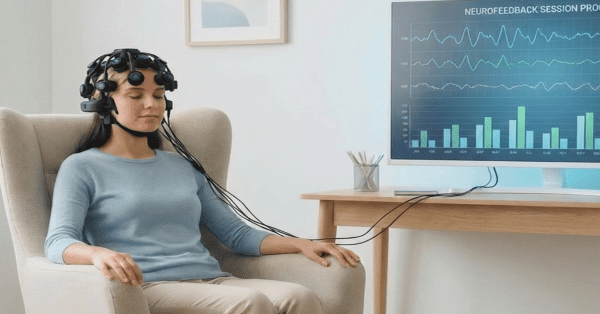
Each session lasts about 30–45 minutes. During that time, sensors monitor your brainwaves in real time. When your brain produces healthier patterns, you receive instant feedback (via visual or audio cues). Over time, your brain learns to repeat those patterns on its own.
How Many Sessions Are Usually Needed?
Here’s a general breakdown:
| Condition | Approximate # of Sessions |
| ADHD | 30-40 |
| Anxiety | 20-30 |
| PTSD or trauma | 40-60 |
| Concussion | 30-50 |
| Sleep issues | 15-25 |
These ranges are flexible based on individual progress and symptom severity.
Why Multiple Sessions?
Just like physical therapy retrains muscles, neurofeedback retrains brain patterns. The process is gradual, but the effects are long-lasting.
How Brain Mapping Improves Treatment Efficiency
At Neuron Connect, we begin with a qEEG brain map to:
- Identify your unique brainwave imbalances
- Build a custom training protocol
- Track changes session by session
This saves time and increases your chances of lasting results.
When Will I Notice a Difference?
Most clients begin to feel improvements between sessions 8 and 15, including:
- Better focus or mood
- Fewer emotional outbursts
- Improved sleep
- Less mental fatigue
The full benefits build up over time, with consistent attendance and a well-matched protocol.
What Happens After Treatment Ends?
Many clients experience lasting change after completing a series of sessions. In some cases, maintenance sessions (1–2 per month) may be recommended to reinforce progress—especially in high-stress lifestyles.
Ready to start neurofeedback, but not sure how long it’ll take?
Let’s map your brain and build your plan—one session at a time.
Schedule your consult at Neuron-Connect.com
References:
Arns, M., et al. (2009). Efficacy of Neurofeedback Treatment in ADHD: The Effects on Inattention, Impulsivity and Hyperactivity. Clinical EEG and Neuroscience.
Gevensleben, H., et al. (2009). Is Neurofeedback an Efficacious Treatment for ADHD? A Randomised Controlled Clinical Trial. Journal of Child Psychology and Psychiatry.
Hammond, D. C. (2011). What is Neurofeedback: An Update. Journal of Neurotherapy.
