
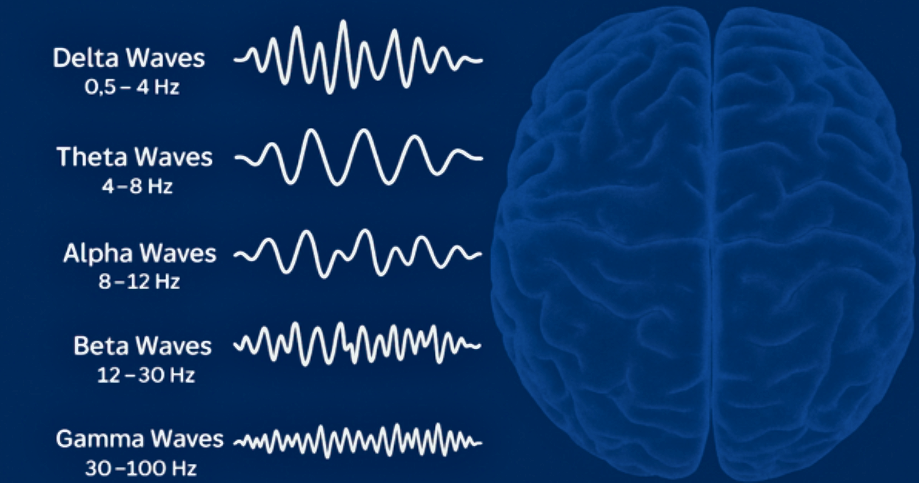

Your brain is constantly buzzing with electrical activity. These signals—called brain waves—influence how you feel, think, and function every single day. At Neuron Connect, we use advanced brain mapping technology called qEEG (quantitative EEG) to measure these brain waves and uncover how your brain is working.
Here’s a beginner-friendly guide to the five brain wave frequencies qEEG measures, what they mean, and how they relate to your mental health.
What Is qEEG?
qEEG is a non-invasive brain imaging tool that reads your brain’s electrical signals using sensors placed on your scalp. Unlike a standard EEG that shows raw wave activity, qEEG turns this data into a detailed brain map, helping us identify areas of over- or underactivity linked to conditions like:
- Anxiety
- ADHD
- Depression
- PTSD
- Sleep issues
This brain map lets us personalize treatments like neurofeedback therapy with incredible accuracy.
The 5 Main Brain Wave Frequencies
Each brain wave frequency tells a story about your mental state, mood, and focus. Let’s break them down:
1. Delta Waves (0.5 – 4 Hz)
Deep sleep, healing, and restoration
Delta waves are the slowest brain waves and are most active during deep, dreamless sleep. These waves help your body repair, grow, and recover.
Too much delta during the day? You may feel sluggish or foggy.
Too little at night? Your sleep may feel shallow or disrupted.
2. Theta Waves (4 – 8 Hz)
Creativity, daydreaming, and light sleep
Theta waves appear when you’re relaxed, meditative, or falling asleep. They’re linked to vivid imagery, deep emotions, and intuition.
Excess theta while awake? You may feel distracted or unfocused—common in ADHD and depression.
Balanced theta? It fuels creativity and imagination.
3. Alpha Waves (8 – 12 Hz)
Calm, focus, and being present
Alpha waves are your brain’s “chill zone.” They show up when you’re calm but alert—like when you meditate, take a deep breath, or get into a creative groove.
Low alpha? You might feel anxious or on edge.
Healthy alpha? You’re more likely to feel grounded, balanced, and mentally clear.
4. Beta Waves (12 – 30 Hz)
Thinking, learning, and active focus
Beta waves help you concentrate, solve problems, and stay alert. They’re most active during busy workdays, planning, or deep conversations.
Too much beta? You may feel anxious or stressed.
Too little beta? You may struggle to stay focused or motivated.
5. Gamma Waves (30 – 100 Hz)
Learning, memory, and peak performance
Gamma waves are the fastest and are linked to high-level thinking, problem-solving, and memory. They’re involved when you’re in a flow state, highly engaged, or deeply learning.
Strong gamma waves? Better brain connectivity, sharper learning, and improved perception.
Why Does Brain Wave Balance Matter?
Your brain naturally shifts between these wave states all day long depending on what you’re doing—working, relaxing, sleeping, or solving a problem. But when certain brain waves are out of balance, it can lead to:
- Mood swings
- Trouble focusing
- Poor sleep
- Low energy
- Anxiety or depression symptoms
qEEG helps us see where those imbalances are—so we can fix them.
How Neuron Connect Uses qEEG to Improve Brain Function
At Neuron Connect, we use qEEG to:
- Identify brainwave imbalances linked to your symptoms
- Create a personalized neurofeedback therapy plan to rebalance brain activity
- Track your progress as your brain learns to function more efficiently
- Support a range of conditions including ADHD, anxiety, depression, and trauma
Every brain is unique—your treatment should be too.
Ready to See Your Brain Waves in Action?
Want to know how your brain is performing? At Neuron Connect, we use qEEG to unlock the full picture of your brain’s health. Whether you’re dealing with ADHD, anxiety, or just want better focus and clarity, our team can help you create a science-backed plan for better brain performance.
👉 Book your brain mapping session today
References:
Hammond, D.C. (2011). What is Neurofeedback: An Update. Journal of Neurotherapy.
Amen Clinics. “Brain Wave Types and What They Mean.” https://www.amenclinics.com
ISNR (International Society for Neuroregulation & Research). https://isnr.org
One response to “User Guide: The 5 Brain Wave Frequencies Measured by qEEG (And What They Mean for Your Mental Health)”
[…] often causes excessive high-frequency brainwaves (like beta or gamma) and too little calming activity (like alpha). Neurofeedback gently retrains the brain to return to […]