
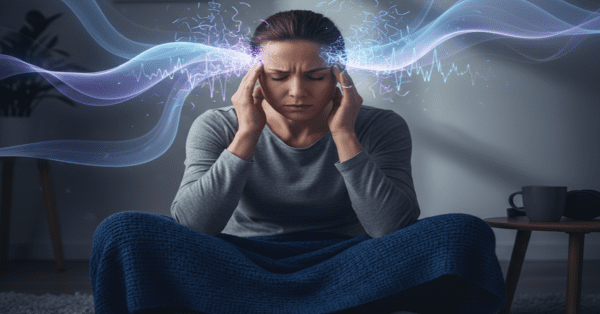

When the Brain Won’t Slow Down
Many people struggle with poor sleep or frequent migraines, but few realize that these issues are often caused by dysregulated brainwave activity. When your brain stays in a high-alert state, it’s harder to relax, rest, or stay pain-free.
At Neuron Connect, we use neurofeedback therapy to help retrain the brain—naturally reducing migraines and improving sleep quality.

How Neurofeedback Works
During a session, sensors monitor your brainwaves while you relax. When your brain produces calm, balanced wave patterns, you receive positive feedback (like visuals or sounds). Over time, your brain learns to self-regulate and shift out of stress patterns.
How It Helps with Sleep
- Trains the brain to reduce overactive beta waves
- Increases delta and theta activity to support deeper sleep
- Helps calm the nervous system before bedtime
- Reduces waking throughout the night
How It Helps with Migraines
- Calms brainwave overactivation in sensory processing areas
- Reduces migraine frequency and intensity over time
- Helps manage pain without medications
- Decreases neurological reactivity to common triggers
Who It Helps
- Adults with chronic insomnia or early waking
- Teens or adults with stress-related migraines
- Anyone seeking drug-free solutions for long-term relief
Results You Can Expect
Many clients begin to feel improvements after 10–15 sessions, especially when supported by healthy lifestyle habits. For lasting results, consistent neurofeedback and proper brainwave training are key.
Ready for better sleep and fewer headaches?
Let Neuron Connect help your brain heal.
Schedule your consult at Neuron-Connect.com
References:
Hammond, D. C. (2011). Neurofeedback for Insomnia: A Review of the Literature. Journal of Neurotherapy.
Walker, J. E., & Kozlowski, G. P. (2005). Neurofeedback Treatment of Epilepsy, Depression, and Insomnia. Child and Adolescent Psychiatric Clinics of North America.
Stokes, D. A., & Lappin, M. S. (2010). Neurofeedback and Biofeedback with 37 Migraineurs: A Clinical Outcome Study. Behavioral and Brain Functions.
