
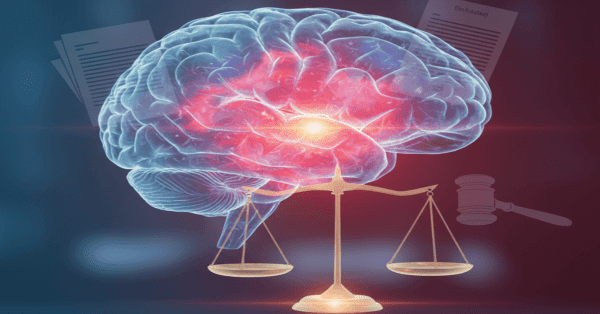

If you or a loved one has suffered a traumatic brain injury (TBI), especially due to an accident, proving the damage in court can be challenging. Traditional scans like Magnetic Resonance Imaging (MRIs) or CAT Scans (CTs) don’t always show the full picture. That’s where qEEG brain mapping comes in – a powerful tool that provides objective evidence of brain function changes, helping support both medical recovery and legal justice.
What Is qEEG Brain Mapping?
Quantitative EEG (qEEG) is a non-invasive technique that measures electrical activity in the brain. Unlike standard imaging, it reveals brainwave patterns that indicate how well (or poorly) different brain regions are functioning.
With just a 20 – 30 minute session, qEEG can detect imbalances related to:
- Memory loss
- Mood swings
- Attention issues
- Sleep disturbances

How It Helps in TBI Legal Cases
In court, objective evidence is powerful. qEEG:
- Identifies neurological damage even when MRIs look normal
- Supports personal injury claims with measurable proof
- Links symptoms (like anxiety or focus problems) to brain activity
When paired with legal documentation and medical testimony, qEEG becomes a strong advocate for accident victims.
Backed by Science
Several published studies show that qEEG:
- Detects micro-level brain injuries not seen in scans
- Predicts long-term cognitive outcomes
- Helps tailor treatment plans for recovery
Why Neuron Connect Is a Trusted Partner for TBI Recovery
At Neuron Connect, we work closely with personal injury attorneys, doctors, and therapists to ensure our qEEG reports are:
- Clinically accurate
- Legally supportive
- Easy to understand and share in litigation
Whether you’re managing a TBI or helping a client, we’re here to guide your next step.
Schedule a qEEG Brain Map Today
Visit Neuron-Connect.com to learn how we support recovery and justice for accident victims across Arizona.
References:
Thatcher, R. W., North, D. M., & Biver, C. J. (2014). EEG and intelligence: Electrophysiological intelligence measures from a triarchic theory of intelligence perspective. In Neuroimaging Personality, Social Cognition, and Character (pp. 101–123). Elsevier.
→ Shows qEEG applications in assessing cognitive function.
Arciniegas, D. B. (2011). Clinical electrophysiologic assessments and traumatic brain injury: Beyond “lights on, lights off.” Journal of Head Trauma Rehabilitation, 26(4), 253–265.
→ Reviews how qEEG can aid TBI assessments beyond standard imaging.
La Vaque, T. J., et al. (2002). Template for developing guidelines for the evaluation of the clinical efficacy of psychophysiological interventions. Applied Psychophysiology and Biofeedback, 27(4), 273–281.
→ Recognized qEEG and neurofeedback as clinical tools with growing research support.
Hammond, D. C. (2011). What is neurofeedback: An update. Journal of Neurotherapy, 15(4), 305–336.
→ Provides modern evidence for neurofeedback and qEEG use in clinical settings.
Frontiers in Human Neuroscience – The Clinical Utility of EEG in Traumatic Brain Injury Diagnosis and Recovery
→ Link to source
→ Peer-reviewed article discussing how qEEG supports TBI diagnosis and tracking.
