
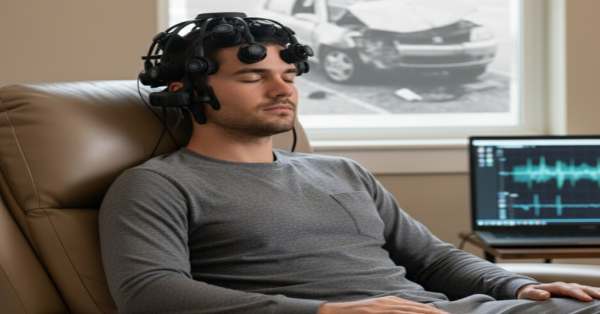

After a car crash, lingering headaches, memory issues, or foggy thinking could be signs of a concussion. But even when CT scans or MRIs look “normal,” your brain could still be struggling. At Neuron Connect, we use neurofeedback therapy to help accident victims recover faster—by retraining the brain itself.
What Is a Concussion?
A concussion is a mild traumatic brain injury (mTBI) that disrupts normal brain function. Common symptoms include:
- Difficulty focusing
- Mood swings
- Sleep issues
- Mental fatigue
These symptoms can last for weeks—or even months—if not treated properly.

How Neurofeedback Helps Heal the Brain
Neurofeedback is a non-invasive therapy that trains your brain to self-correct unhealthy patterns. Using real-time EEG feedback, your brain learns to shift into more balanced, stable wave activity.
How Neurofeedback Helps Heal the Brain
This is especially helpful after a concussion, when brainwaves can become disorganized or sluggish.
Benefits of Neurofeedback for Concussion Recovery
- Reduces Headaches and Brain Fog: Improves clarity and reduces overstimulation that causes fatigue.
- Improves Mood Stability: Regulates emotional centers affected by trauma or inflammation.
- Boosts Cognitive Function: Enhances memory, attention, and mental endurance.
- Improves Sleep: Restores natural sleep cycles by calming overactive brain waves.
- Drug-Free and Safe: It’s non-invasive, personalized, and has no side effects.
Why It Works After an Auto Accident
Many concussion symptoms are tied to irregular brain activity—not visible damage. Neurofeedback addresses that directly, even when other scans fall short. It also supports recovery in cases involving:
- Whiplash
- PTSD
- Chronic pain
- Attention or memory changes
Real-World Success at Neuron Connect
We’ve helped hundreds of accident victims across Arizona regain mental clarity and peace of mind. Using qEEG brain mapping, we tailor every neurofeedback protocol to your exact needs.
🚗 Had a car accident and still don’t feel like yourself?
Book a brain map and consultation at Neuron Connect today.
References:
Schoenberger, N. E., et al. (2001). Neurofeedback Training for TBI: Improvements in Attention and Memory. Journal of Head Trauma Rehabilitation.Peniston, E. G., & Kulkosky, P. J. (1991). Neurofeedback in the Treatment of PTSD.Journal of Clinical Psychology.