PTSD can feel like your brain is stuck in survival mode. Whether it stems from childhood trauma, abuse, a car accident, or military service, the impact is real and lasting.
Overview
PTSD can feel like your brain is stuck in survival mode. Whether it stems from childhood trauma, abuse, a car accident, or military service, the impact is real and lasting. At Neuron Connect, we offer neurofeedback therapy to help your mind finally find peace—without medication.
What Is PTSD?
Post-Traumatic Stress Disorder (PTSD) occurs when the brain and nervous system stay in a state of high alert long after the threat is gone. Symptoms may include:
It’s especially effective for ADHD because it targets:
- Nightmares or flashbacks
- Panic attacks
- Irritability or hypervigilance
- Difficulty sleeping or concentrating
How Neurofeedback Helps Rewire the Trauma Brain
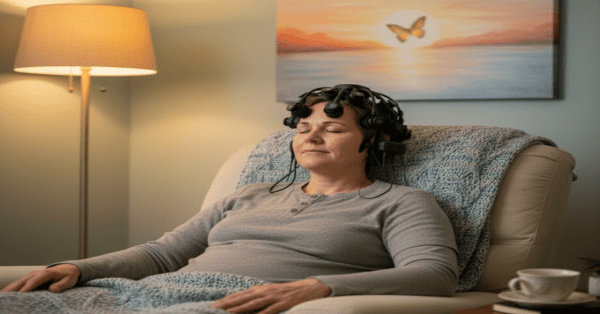
PTSD often causes excessive high-frequency brainwaves (like beta or gamma) and too little calming activity (like alpha). Neurofeedback gently retrains the brain to return to a calmer, safer state—without reliving trauma.
Top Benefits of Neurofeedback for PTSD
- Reduces Flashbacks & Panic: Creates a sense of safety by calming the amygdala and emotional centers.
- Improves Sleep: Helps the brain settle into healthier delta and theta wave patterns.
- Increases Emotional Resilience: Boosts self-regulation, even in high-stress environments.
- Decreases Hypervigilance: Calms fight-or-flight responses that keep the body on edge.
- Restores Cognitive Clarity: Supports focus, memory, and a sense of control.
Is Neurofeedback Safe for Trauma Recovery?
Yes! It’s especially beneficial for clients who:
- Have not responded well to traditional therapy or medication
- Feel overwhelmed when talking about the trauma
- Prefer a non-verbal, gentle approach
Why Choose Neuron Connect?
Healing is possible—and it starts with a calm brain.
Book your neurofeedback consultation at Neuron Connect today.
🔗neuron-connect.com
- We start with qEEG brain mapping to understand how your trauma is affecting your brain
- No need to talk about past trauma—just train your brain to move forward
- Multiple locations across Arizona with flexible payment plans
References:
Peniston, E. G., & Kulkosky, P. J. (1991). Neurofeedback in the Treatment of PTSD. Journal of Clinical Psychology.
van der Kolk, B. A., et al. (2016). Neurofeedback as Treatment for PTSD. Frontiers in Psychology.
Hammond, D. C. (2011). What Is Neurofeedback: An Update. Journal of Neurotherapy.
Ryan Beatty, BCN
Ryan Beatty, BCN is the founder of Neuron Connect and a Board Certified Neurofeedback practitioner with expertise in qEEG brain mapping. He has over 15 years of experience in neurological care and founded Neuron Connect to bring data-driven, drug-free brain health treatment to Arizona.